Contributions:
- Component Design
- Component Documentation
- Developer Collaboration
- Prototype Strategy
- Cross-functional Design Reviews
- Architecture Planning/Migration
Duration:
- 3 Months
Tools:
- Figma
- Confluence
- PrimeNG
- Miro
Team:
- Design Lead
- UI Designers (3)
- Front-End Developers
Overview
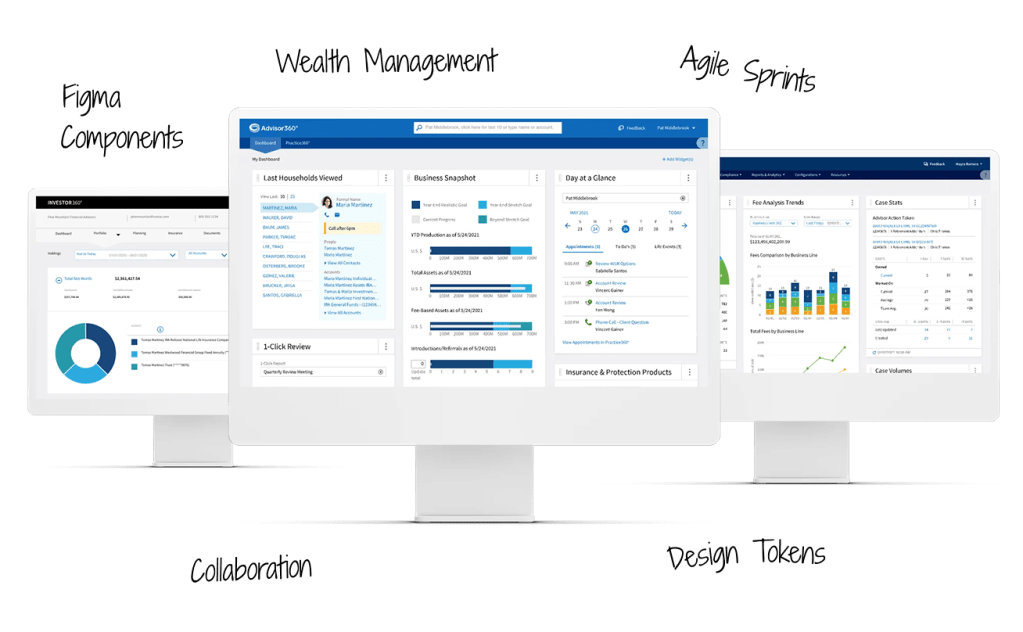
Lead component design and developer collaboration for Advisor360’s first comprehensive design system, unifying visual language and interaction patterns across a suite of enterprise wealth management tools.
Conducted comprehensive UI audits across product areas, designed components, established documentation standards, and facilitated weekly design syncs to ensure system adoption and technical feasibility.
The existing platform had evolved organically with inconsistent patterns across services. Teams were rebuilding similar components repeatedly, QA cycles were extended by visual inconsistencies, and feature development was slowed by decision paralysis.
Built reusable templates and UI components within an evolving design system, resulting in a 90% reduction in QA time and 85% shorter dev syncs.
Process
Design Approach
- Conducted comprehensive UI audits across Compliance, Trading, and Insurance screens documenting existing patterns and identifying consolidation opportunities.
- Held weekly design syncs with design team ensuring component structure alignment and behavior consistency across all system platform.
- Designed mid-level components including data tables, form patterns, and navigation structures leveraging PrimeNG technical constraints and capabilities.
- Established documentation standards moving from Figma-based navigation to Confluence repository including behavior states and technical implementation requirements.
Developer Handoff + Collaboration
- Technical feasibility was validated early through regular collaboration with engineering teams ensuring component designs aligned with PrimeNG library capabilities and performance requirements.
- Documentation migration to Confluence improved developer access to implementation specs, behavior guidelines, and usage examples reducing back-and-forth communication.
- Component logic and structure were continuously refined based on real-world implementation challenges and edge cases discovered during development cycles.
- Cross-functional feedback loops incorporated input from developers, product managers, and stakeholders throughout component creation and system evolution.
System Evolution & Adoption
- Living system approach treated the design system as an evolving product rather than static deliverable, allowing for component restructuring based on emerging requirements.
- Stakeholder visibility improved through Confluence enabling C-suite leadership to understand business value.
- Component iteration cycles addressed edge cases and technical limitations discovered during implementation ensuring system remained practical and adoptable
Results
Impact
Note: Long-term adoption metrics were not captured due to company restructuring during project timeline.
- Cut developer clarification calls per component from several per sprint to near-zero, thanks to easily accessible specs.
- Minimized redundant custom builds as developers leaned on a growing pattern library, improving consistency and efficiency.
- Enhanced leadership visibility through centralized documentation, making the design system’s business value and adoption status transparent and measurable.
This work deepened my understanding of system design — not just building reusable UI, but balancing decisions between design intent, dev feasibility, and user need. It also reminded me where I thrive: Translating design into action. Building structure out of complexity. Thinking beyond pixels.
 Jeovanny Tovar | UX Designer